In the 1910s the people who remembered the Civil War and its aftermath were in their 50s and 60s or older. Knowing the huge costs of that war in blood and treasure, Americans were enjoying a peaceful life and looking askance at European disputes.
With large extended families living together, many knew of a grandfather or uncle who had been maimed or died in the Civil War. “I do not want my son to end up like Uncle John with a wooden leg or worse” was a common thought at dinner tables across America.
War broke out in 1914 as Germany invaded France. Americans were not interested in involvement; it was for Europeans to sort out on the other side of the world. As time went on, war news from Europe dominated the American newspapers, and slowly a public debate began as the calendar turned to 1915.
By this time there were nurses near the front lines caring for the wounded. Florence Nightingale, nursing heroine of the Crimean War, had established nursing as a profession, and the first Americans on the European battlefields of WWI were professional nurses. They joined their European counterparts in saving lives.
The Lusitania
The headlines on May 8th had a huge impact. The Lusitania, the world’s largest passenger ship, traveling from America to Ireland, was sunk by German torpedoes on May 7th. It went down in 18 minutes, eleven miles off the coast of Ireland. In those eighteen minutes, 1,198 people, including 128 Americans, went to a watery grave. Only 761 were rescued.
It had munitions aboard, screamed German headlines. Not so, cried English and American newspapers: it was a passenger ship, as witnessed by the terrible loss of human life. To this day no investigation has ruled out that some munitions, like shell casings, were in the hold. Americans thought of Germany as a monster. With not a soldier on board, the Lusitania should have been allowed to sail safely to Ireland, according to American public opinion.
Germans use flamethrowers at Flanders! Millions of soldiers killed at Verdun! Germans introduce mustard gas! Flanders Fields runs red with blood!
Each new headline seemed more horrific than the last. These were the battlefield conditions Americans debated entering.
America enters the war
On April 2, 1917 America declared war on Germany and instantly began readying troops and ships for the European theatre. Slogans like “the war to end all wars” were common. In June 1918 the American Expeditionary Forces were sent to Europe.
Few American towns were left untouched. Gold Star Flags appeared in towns large and small across America. Americans were bleeding and dying, and American families prayed and cried, then prayed again.
Peace at a terrible cost
On November 11, 1918 the guns fell silent as Germany surrendered. Heartbroken Americans were proud that American forces had been the deciding factor in defeating the Germans. The statistics compiled at the end of the war were heartbreaking:
- Thirteen million men and women died on the battlefield. About 2.3 million died of disease, many of them the nurses who had dedicated their lives to tending the wounded and the sick.
- More than one million French and German soldiers died at Verdun from February 21 to December 18, 1916, before America entered the war. A like number was killed at Flanders Fields.
- 60–70% of American military forces were injured.
From Washington State:
- 877 soldiers were killed
- 3,070 soldiers were wounded
- 355 of those killed were from King County and 52 from Pierce County
Across the country Americans were shocked at the use of poisonous gases like chlorine and mustard gas, and horrified by a new weapon, the flamethrower. Heroes came home with damaged lungs, coughing painfully, and needed care. Burned bodies required painful treatment, and scarring was inevitable. These heroes traveled on trains across the country to their homes.
People vowed that no one would forget the horrors of modern warfare, and determined that this would be the end of all war. How to make people remember these men? The question raged across the country.
Trees as memorials
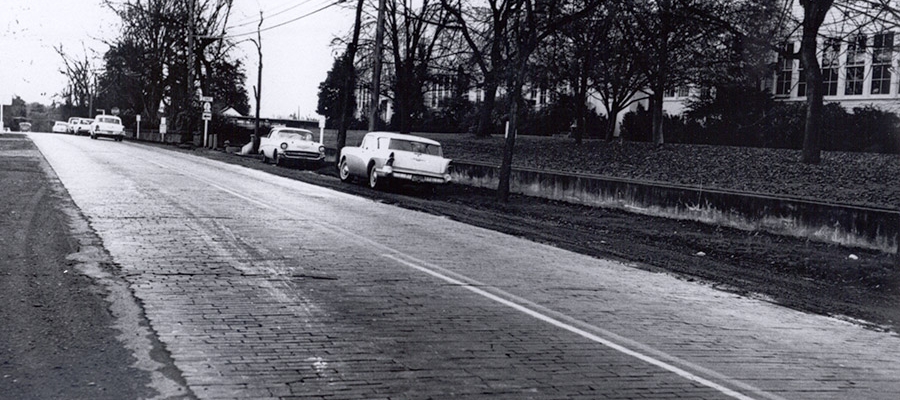
A movement began in Nebraska to plant living trees to beautify the highways as a monument to those who had died in this war. Tree-planted roads as living memorials sprang up across the country, and Des Moines Memorial Drive was one of them.
Eventually other monuments were dedicated. Today Des Moines Memorial Drive, between South Park Bridge and the Des Moines Marina, is the only living road of remembrance left. As the dying trees are replanted and other artistic elements are added, we remember the horrific deaths and injuries of brave men determined to fight for freedom and an end of war.
Help keep the story told
Share a family story, volunteer, or support the preservation of the Drive.
Get involved